Slams or
stops short.
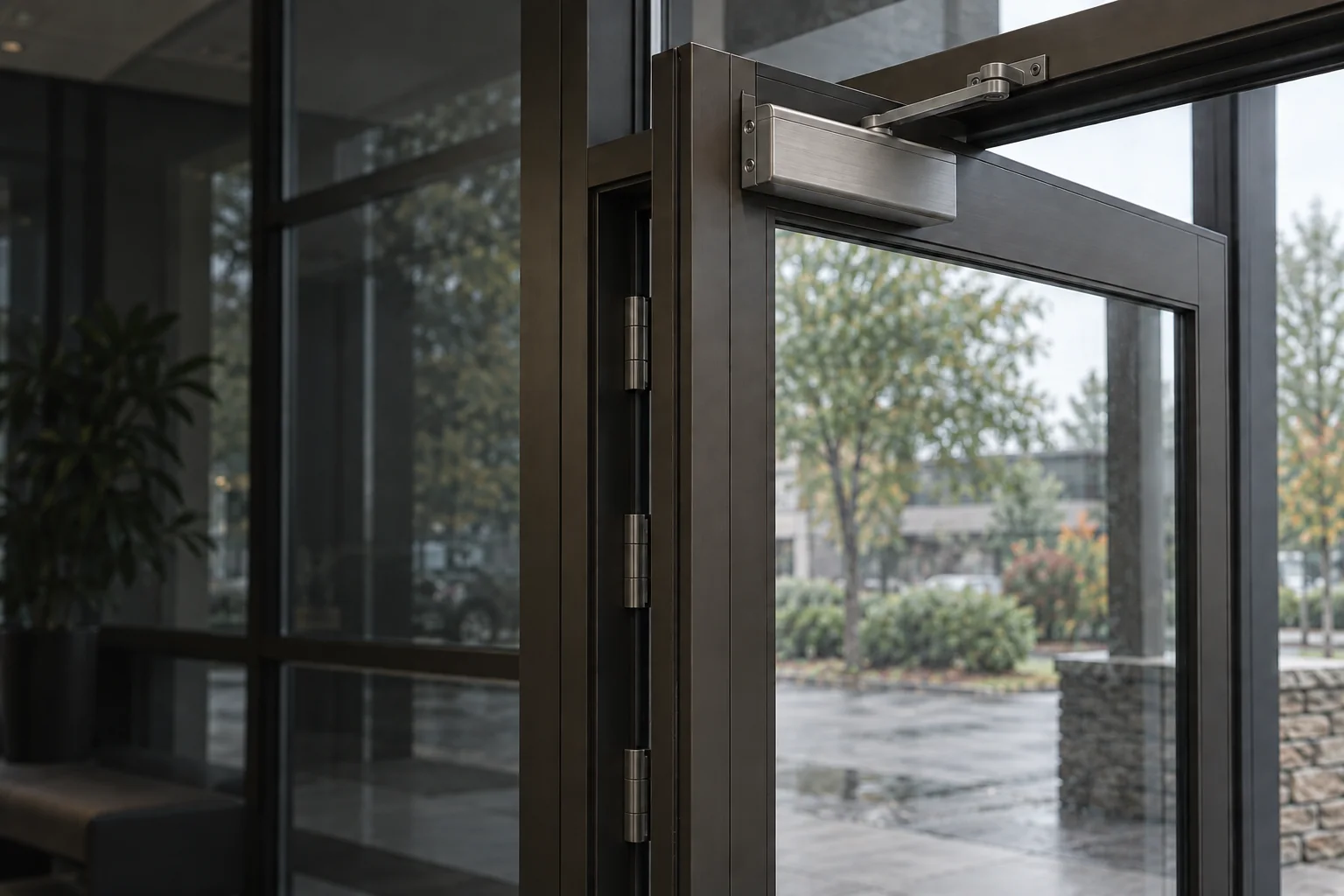
A closer controls how the door shuts. If it slams or fails to finish closing, we check the closer, its mounting and whether the door catches as it moves.
 Get a quote
 Door slamming, handle loose or lock not catching? We check the hardware and how it fits your entrance before recommending a repair.
Entrance won't close or secure? Call and tell us first.
A part may be worn, loose or out of line with the door. Describe what has changed.
A closer controls how the door shuts. If it slams or fails to finish closing, we check the closer, its mounting and whether the door catches as it moves.
The strike is the plate the latch meets on the frame. We check their alignment and the lock itself, especially if you need to lift or push the door to secure it.
A handle that moves at its base or no longer operates the latch needs a closer look. We check the part and its fixing points before choosing a replacement.
The same symptom can come from worn hardware or a door that has moved out of alignment. We check both before recommending what to keep and what to replace.
If the door itself is too damaged to keep, explore door replacement .
The quote depends on what has failed and which parts can stay. Tell us about the entrance and the problem so we can discuss the next step.
Ask about your hardwareAsk about assessment, visit and after-hours charges before arranging a visit. Review the parts and labor included in the proposed work.
Call to check availability. An adjustment and a repair requiring a replacement part can have different schedules; identifying the hardware helps establish what comes next.
If the door will not secure, explain that when you call. See unsecured door help for the next step.
Share your city, contact details and door type. Tell us whether it slams, stops short, feels loose or will not lock, and whether the entrance can still be used.
Include any brand or model name that is easy to read; you do not need to remove hardware. We follow up about the request and whether a site assessment is needed.
Review the repair, price and timing before arranging the work. Confirm access to the entrance and whether a compatible part needs ordering.
A request starts a conversation. It does not book an appointment or authorize a paid visit.
Start your repair requestShare your city or ZIP code to confirm availability for your entrance.
Elsewhere in Puget Sound?
Check your service areaClosing, latching, and locking each have a part to play.
Ask about your repairPossible causes include incorrect adjustment, lost hydraulic fluid, or internal damage. The door and closer should be checked together. A leaking or damaged closer may require replacement rather than another adjustment.
An adjustment does not replace lost hydraulic fluid or repair a failed seal. Have the closer assessed for replacement or a manufacturer-supported repair. Avoid assuming that tightening an adjustment will resolve a leak.
A closer controls the door as it returns toward the frame. The latch and locking hardware secure it. These parts must work together; a door can appear shut while its latch has not engaged.
Appearance alone does not establish compatibility. Door weight, fixing positions, handing, function, and any rated assembly requirements matter. Identify the existing hardware and opening before buying replacements.
That can indicate interference between the bolt or latch and the frame or strike. It does not by itself prove the lock is faulty. Describe whether you must push, pull, or lift the door to secure it.